CBD Massage Oil: 10 Powerful Benefits Beyond a Regular Massage
CBD massage oil may ease pain, calm anxiety, and support skin health. Here's an honest look at its benefits, legal history, and limits.
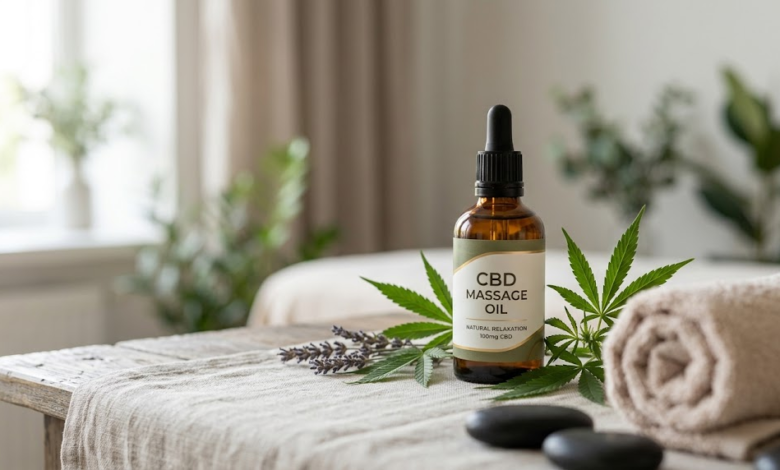
CBD massage oil has moved from a niche wellness product to something you’ll find on the menu at most spas and even some physical therapy clinics. But it wasn’t always this simple. Just a few years ago, the same compound now sold in massage rooms across the country was legally lumped in with marijuana and treated as a controlled substance in most states. That history matters, because it explains why so much confusing, exaggerated, and sometimes outright false information still circulates about what this oil can actually do.
This article takes a grounded look at CBD oil for massage, without the miracle-cure language you’ll see on a lot of product pages. We’ll cover what the compound is, how it got from the black market to the shelf of your local wellness store, and ten real, evidence-informed benefits it may add to a standard massage. We’ll also be upfront about what it can’t do and where the science is still thin. If you’re considering a CBD-infused massage for pain, stress, or skin issues, you deserve facts, not marketing copy.
What Is CBD Massage Oil, Really?
CBD, short for cannabidiol, is one of more than a hundred compounds found in the cannabis and hemp plant. Unlike THC (tetrahydrocannabinol), CBD doesn’t produce a high. CBD massage oil is typically a carrier oil, such as jojoba, coconut, or sweet almond oil, infused with a CBD extract. The idea is that when it’s massaged into the skin, it works alongside the physical manipulation of muscles and joints to add an extra layer of relief.
CBD interacts with the body’s endocannabinoid system, a network of receptors involved in regulating pain signals, inflammation, mood, and sleep. According to the National Center for Complementary and Integrative Health (NCCIH), early research suggests cannabinoids like CBD may help with certain types of chronic pain and inflammation, though the agency is also clear that much of this research is still preliminary, especially for topical use.
A Brief, Honest History: From Schedule I to Spa Shelf
If you want to understand why CBD massage oils are treated with so much suspicion by some people and so much hype by others, you have to look at where they came from.
For decades, hemp and marijuana were treated as the same thing under U.S. law. Both fell under the Controlled Substances Act as Schedule I drugs, the same legal category as heroin. This wasn’t a minor technicality. People were arrested, prosecuted, and in some cases sentenced to years in prison for possessing or distributing hemp-derived products that, chemically, had nothing to do with getting anyone high. Small hemp farmers who tried to grow the crop for fiber or seed oil risked federal charges because the law made no distinction between hemp and psychoactive cannabis.
That changed on December 20, 2018, when the Agriculture Improvement Act, commonly called the 2018 Farm Bill, was signed into law. The bill removed hemp and hemp derivatives with no more than 0.3% THC by dry weight from the definition of marijuana under federal law. In practical terms, this meant hemp-derived CBD was no longer treated as a Schedule I controlled substance at the federal level.

That said, “legal” didn’t mean “unregulated.” The FDA was explicit that the Farm Bill did not give it a pass to add CBD to food, drinks, or supplements without approval, and it still maintains that position today. You can read the agency’s current stance directly on the FDA’s CBD regulation page.
This history is worth knowing because it explains two things: why some older adults are still hesitant to try CBD oil massage even though it’s legal in their state, and why the market exploded so fast after 2018 that quality control lagged behind demand. A lot of the mistrust around CBD products isn’t paranoia. It’s a reasonable reaction to an industry that grew out of a legal gray zone almost overnight, with plenty of sketchy operators mislabeling products or making claims the FDA has never verified.
10 Benefits of CBD Massage Oil Beyond a Regular Massage
A standard massage already does a lot of good. It increases blood flow, loosens tight muscles, and gives your nervous system a break. Adding CBD massage oil to that routine may offer a few extra layers of benefit, based on what current research and clinical experience suggest.
1. Deeper Muscle Relaxation
Massage therapists who use CBD-infused oil often report that clients’ muscles seem to release tension faster than with a standard oil. This isn’t just anecdotal marketing talk. CBD is thought to interact with receptors involved in muscle tone and pain perception, which may make it easier for a therapist to work into deeply held tension, particularly in the neck, shoulders, and lower back.
2. Reduced Inflammation
Inflammation is behind a lot of the aches people bring to a massage table, from tight shoulders to sore joints. CBD has anti-inflammatory properties that have been studied in animal models and some early human trials. When applied topically during a CBD massage, it may help calm localized swelling in a way a plain carrier oil cannot.
3. Chronic Pain Support
For people managing chronic pain conditions, such as fibromyalgia or lower back pain, a regular massage can bring temporary relief that fades quickly. Some clients report that a CBD massage oil extends that relief window. It’s worth being realistic here: CBD is not a replacement for prescribed pain management, but as a complementary tool, it has enough early evidence behind it to be worth discussing with a doctor.
4. Lower Anxiety and Stress During the Session
Massage already lowers cortisol and activates the parasympathetic nervous system. CBD may add to that calming effect. Several small studies have looked at CBD’s impact on anxiety, and while results vary, many people report feeling noticeably calmer during a CBD oil massage compared to a standard one, without the sedation or impairment associated with THC.
5. Better Sleep After Treatment
Clients frequently report sleeping more soundly the night after a session that includes CBD massage oil. This tracks with existing research suggesting CBD may help with sleep onset and quality in people dealing with pain or anxiety-related sleep issues, both of which are common in people who seek out massage in the first place.
6. Improved Skin Hydration and Barrier Health
CBD extract is naturally rich in fatty acids, which can help nourish and moisturize skin. When blended into a quality carrier oil, CBD massage oil can leave skin feeling smoother and more hydrated than after a massage with a purely mineral or synthetic oil base.
7. Support for Arthritis and Joint Stiffness
People with arthritis often deal with stiffness that limits mobility and makes daily tasks harder. Topical CBD has shown some promise in early studies for reducing joint pain and stiffness. Combined with the physical movement of massage, a CBD-infused massage may offer more flexibility gains than massage alone, though results vary significantly from person to person.
8. Faster Recovery After Exercise
Athletes and active people are increasingly turning to CBD massage oil after workouts. The combination of manual muscle work and CBD’s anti-inflammatory potential may help reduce delayed-onset muscle soreness, though it’s worth noting that the research specific to post-exercise recovery is still limited and mostly based on small studies.
9. A Calmer Nervous System Without the High
This is one of the most important distinctions to make clear: CBD massage oil does not get you high. It contains no more than trace amounts of THC (0.3% or less under federal hemp regulations), so you can drive home, go back to work, or pick up your kids after a session without any impairment. This is a major reason CBD has been embraced by spas and clinics in a way THC products haven’t.
10. A More Personalized Massage Experience
Many massage therapists now offer different CBD concentrations depending on the client’s needs, lighter for general relaxation, stronger for chronic pain or inflammation. This level of customization gives clients more control over their treatment than a one-size-fits-all massage oil.
The Realities: What CBD Massage Oil Can’t Do
None of this means CBD massage oil is a cure-all, and it’s worth being honest about that. The FDA has not approved topical CBD for treating any specific medical condition, and most of the research behind these benefits comes from small studies, animal research, or anecdotal reports from massage therapists and clients. Absorption through the skin is also limited, so the amount of CBD that actually reaches your bloodstream from a massage oil is far lower than from an oral tincture or capsule.
There’s also the issue of product quality. Because the CBD market grew so quickly after the 2018 Farm Bill, and regulation still hasn’t caught up, some products on the market contain far less CBD than labeled, or in rare cases, more THC than the legal limit. A 2017 study published in JAMA found that nearly 70% of CBD products sold online were mislabeled, with some containing significant, undisclosed THC. That’s a real problem for anyone who needs to pass a drug test or is simply trying to avoid THC altogether.
Being clear about these limits isn’t a knock against CBD. It’s just an honest acknowledgment that a CBD oil massage is a complementary wellness tool, not a medical treatment, and that buying from reputable sources matters more than most marketing suggests.
Is CBD Massage Oil Legal Where You Live?
In the U.S., hemp-derived CBD massage oil with 0.3% THC or less is legal at the federal level following the 2018 Farm Bill. However, state laws vary, and a handful of states still have restrictions on hemp-derived products, so it’s worth checking your local regulations before booking a session or buying a product, especially if you’re traveling. Outside the U.S., laws differ widely. Some countries treat CBD the same as any other cannabis derivative and restrict it heavily, while others have clear frameworks for hemp-derived products. If you’re unsure, check with a local massage clinic or pharmacy rather than assuming the rules match wherever you last read about it online.
How to Choose a Safe, Legitimate CBD Massage Oil
Given the mislabeling issues mentioned earlier, a little diligence goes a long way:
- Look for third-party lab testing. A reputable CBD massage oil brand will provide a Certificate of Analysis (COA) showing exact CBD and THC content.
- Check the THC level. It should be listed at or below 0.3%, in line with federal hemp regulations.
- Avoid vague sourcing claims. “Made with natural hemp” means nothing without a COA to back it up.
- Ask your massage therapist what they use. Licensed therapists at reputable spas are usually well informed about the products they apply to clients.
- Start with a patch test. Even natural oils can cause skin reactions, so test a small area first if you have sensitive skin.
Who Should Be Cautious
CBD massage oil isn’t right for everyone. Pregnant or breastfeeding individuals, people on blood thinners or certain medications, and those with open wounds or severe skin conditions should talk to a doctor before trying it. If you’re subject to regular drug testing, know that even trace THC in a poorly regulated product could, in rare cases, show up on a test. This isn’t meant to scare anyone off, just to encourage the same caution you’d apply to any new topical product with active ingredients.
Conclusion
CBD massage oil has earned its popularity honestly, even if the path to legalization was messier than most people realize. What started as a compound tangled up in decades of prohibition and confused with its psychoactive cousin THC is now a legitimate, federally legal addition to massage therapy across most of the United States. The ten benefits covered here, from deeper muscle relaxation and reduced inflammation to better sleep and calmer nerves, are grounded in a mix of early research and consistent client feedback, not miracle claims. At the same time, it’s not a cure for chronic conditions, the research is still developing, and product quality varies enough that buying from a trusted source matters. Approached with realistic expectations, a CBD-infused massage can be a genuinely useful upgrade to a treatment that already works well on its own.